

LOCAL SKY • 12 AUGUST 2026
Solar eclipse over the west coast — West Cumbria times
Across West Cumbria — Workington, Maryport, Whitehaven and inland too — the Moon will take a deep bite out of the evening Sun. About 88% covered at peak. Here’s what you’ll get, and how to watch it without wrecking your eyes.
6.11pm
0%
- 6.11pm · start
- 7.06pm · peak
- 8.03pm · end
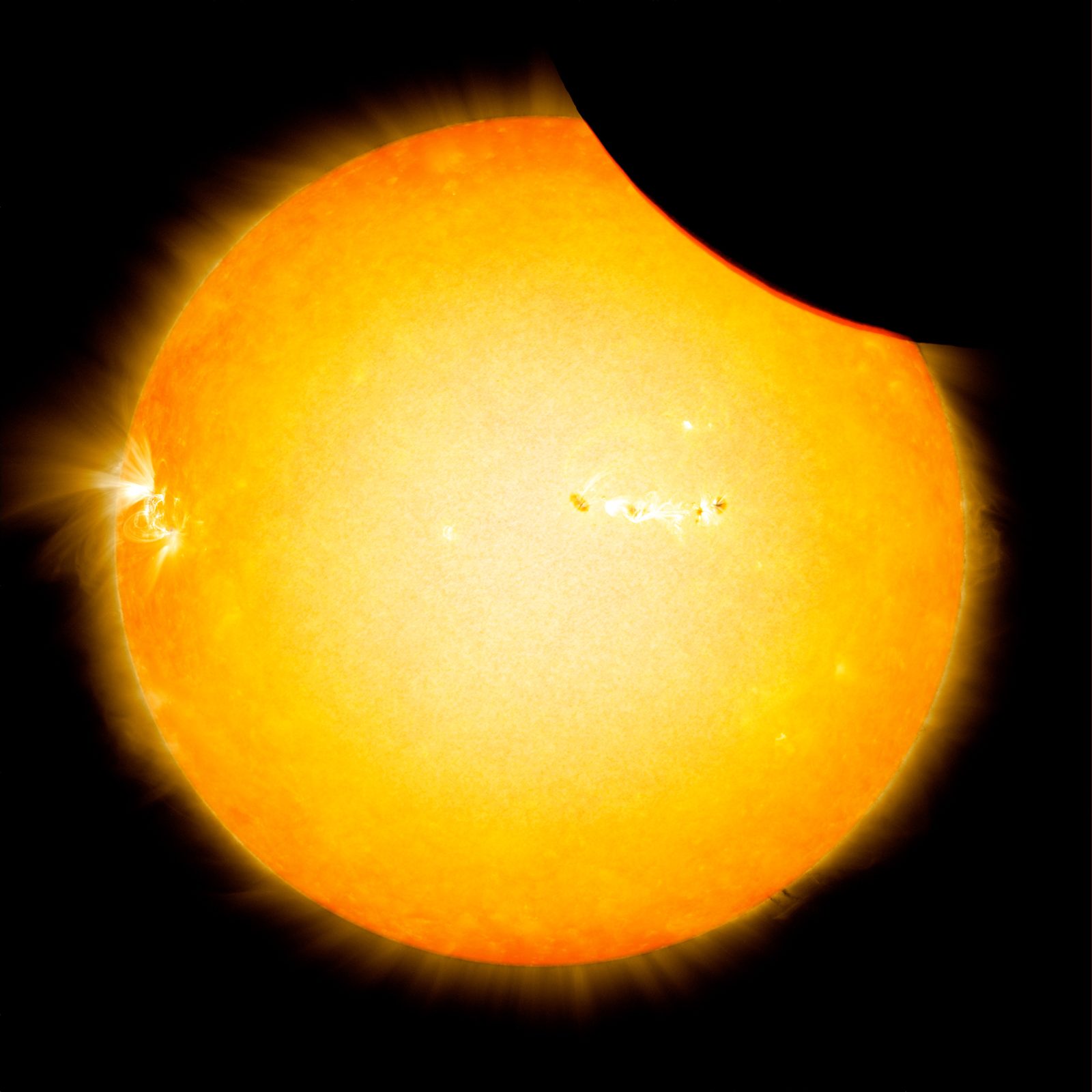
From the UK the Moon crosses the Sun from right to left (BBC Sky at Night / Starwalk). First bite is on the right; at ~88% the remaining Sun is a thin inverted crescent at the top — horns pointing down — then the Moon exits left.
What’s happening tomorrow
On Wednesday 12 August 2026, the Moon slides between Earth and the Sun and casts a narrow shadow across the Northern Hemisphere. Along a thin path through Greenland, Iceland, the Atlantic, northern Spain and a corner of Portugal, the Sun will go fully dark for up to about two minutes — a total solar eclipse.
West Cumbria sits outside that path. From the coast at Workington, Maryport and Whitehaven through to inland spots with a clear western sky, we get a deep partial — roughly nine-tenths of the solar disc covered at maximum. Daylight will look odd — cooler, thinner, a little wrong — but you will still need eye protection for every glance at the Sun.
West Cumbria times
Local times for the west coast (Workington / Maryport band) line up like this (British Summer Time).
| Stage | Time (BST) | What you’ll notice |
|---|---|---|
| Partial begins | ~6.11pm | First bite appears on the Sun’s right edge |
| Maximum | ~7.06pm | ~88% covered; thin “frown” crescent at the top |
| Partial ends | ~8.03pm | Moon slips off left; Sun looks normal again |
At maximum the Sun is still a comfortable height above the west-northwest horizon, and the show wraps up with time left before sunset. You’re not racing a vanishing disc behind the fells.
Where to watch (smart picks)
You need an unbroken view toward the west-northwest — not just “somewhere outside.” Town centres often fail because roofs and trees sit exactly where the Sun will be. The map below pins places chosen for a clear western skyline (weather permitting) — cliff tops, open shore, and high ground with a real horizon over the Irish Sea or Solway.
Scenic viewpoints with a clear west-northwest outlook · tap a pin for why it works, then open in Google Maps.
Will we see it?
Live hourly forecast · West Cumbria (Workington)
As of writing (evening of 11 August), Met Office-style outlooks show a warm dry day with sunny intervals earlier, then more cloud building into the eclipse window (roughly 6–8pm). That doesn’t kill the event — but a thicker bank to the west-northwest could hide the solar disc even if the sky overhead still looks bright.
The strip below loads live forecast data for Workington. When the weather models update, refresh this page and the hours / icons / temperatures should update with them.
Loading live forecast…
Also check Met Office or BBC Weather for Workington on the day. NASA livestream backup — nasa.gov/live from about 6.15pm BST.
What Spain gets that we don’t
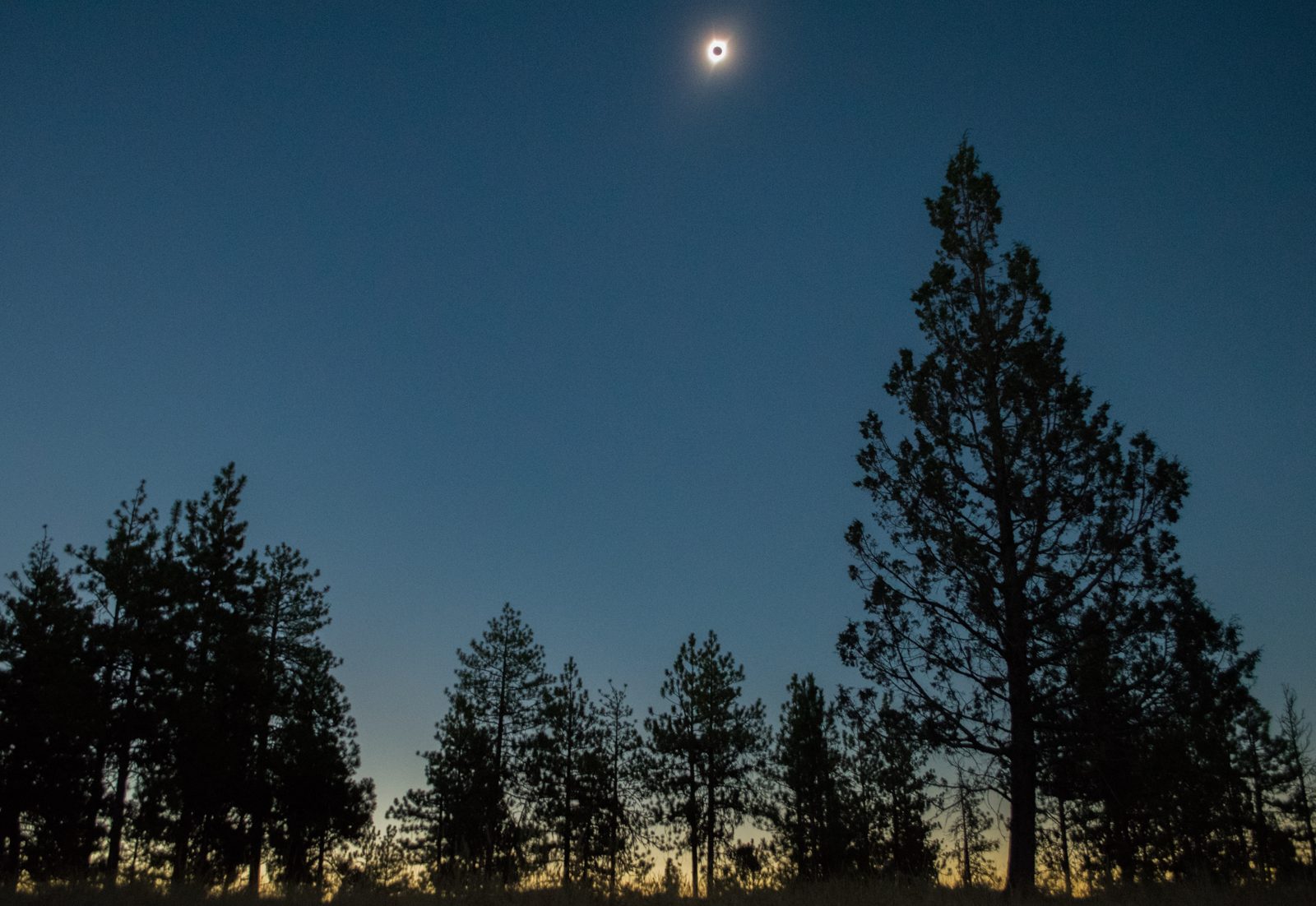
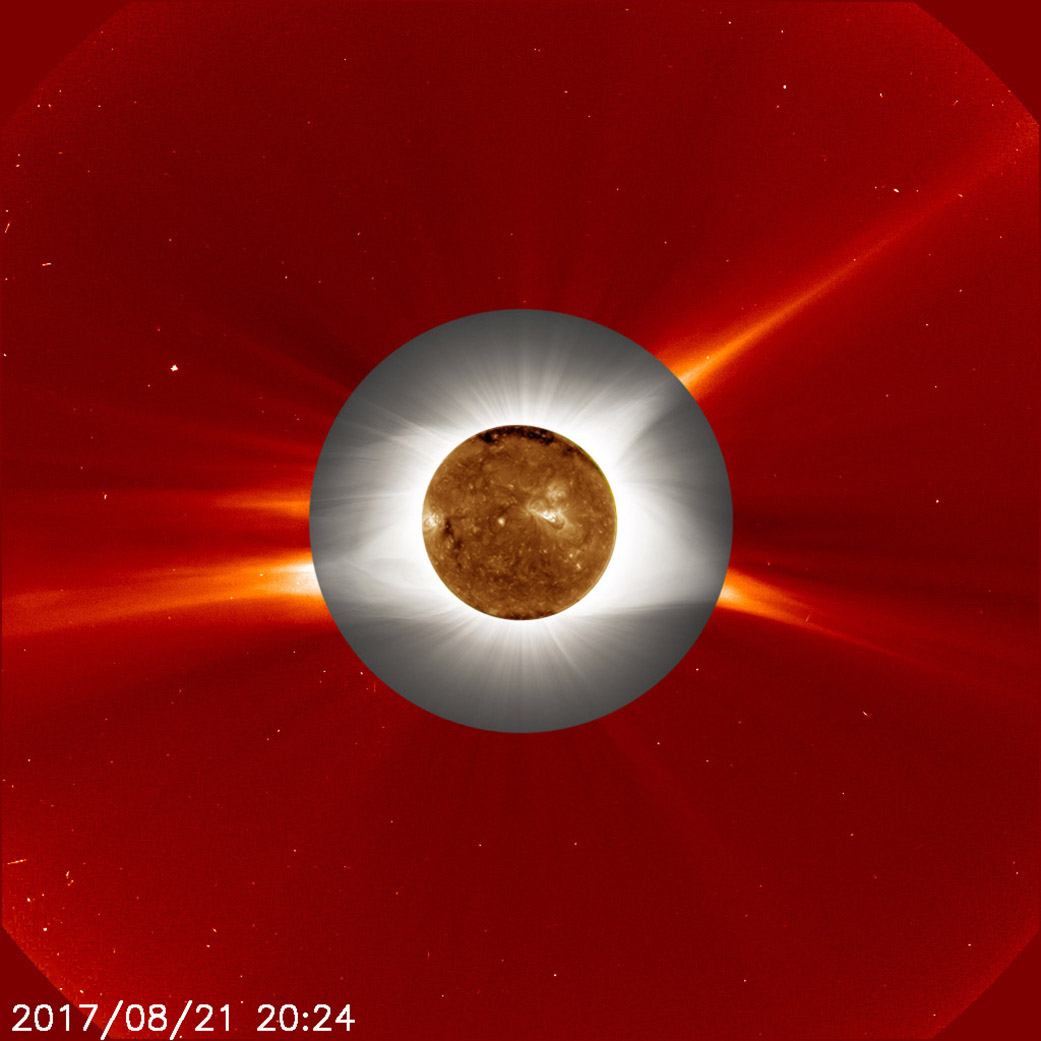
Inside the path of totality, for a brief window, the Sun’s bright face is completely blocked and the corona — the ghostly outer atmosphere — blooms into view. That’s the photograph you’ve seen a hundred times. We won’t get that from West Cumbria. What we get instead is a long, slow bite — a fat crescent shrinking, then recovering, over nearly two hours.
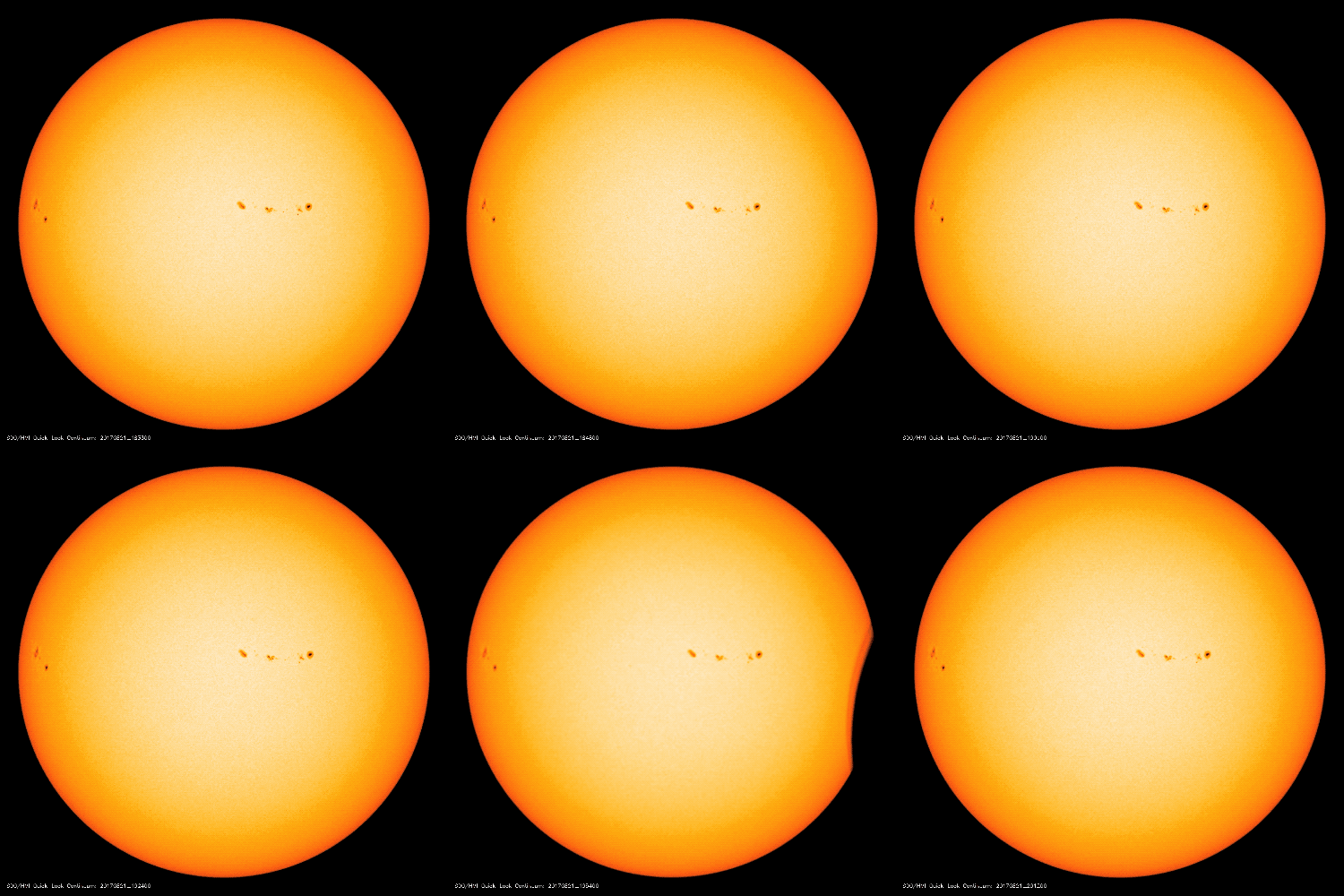
Watch it move (real footage)
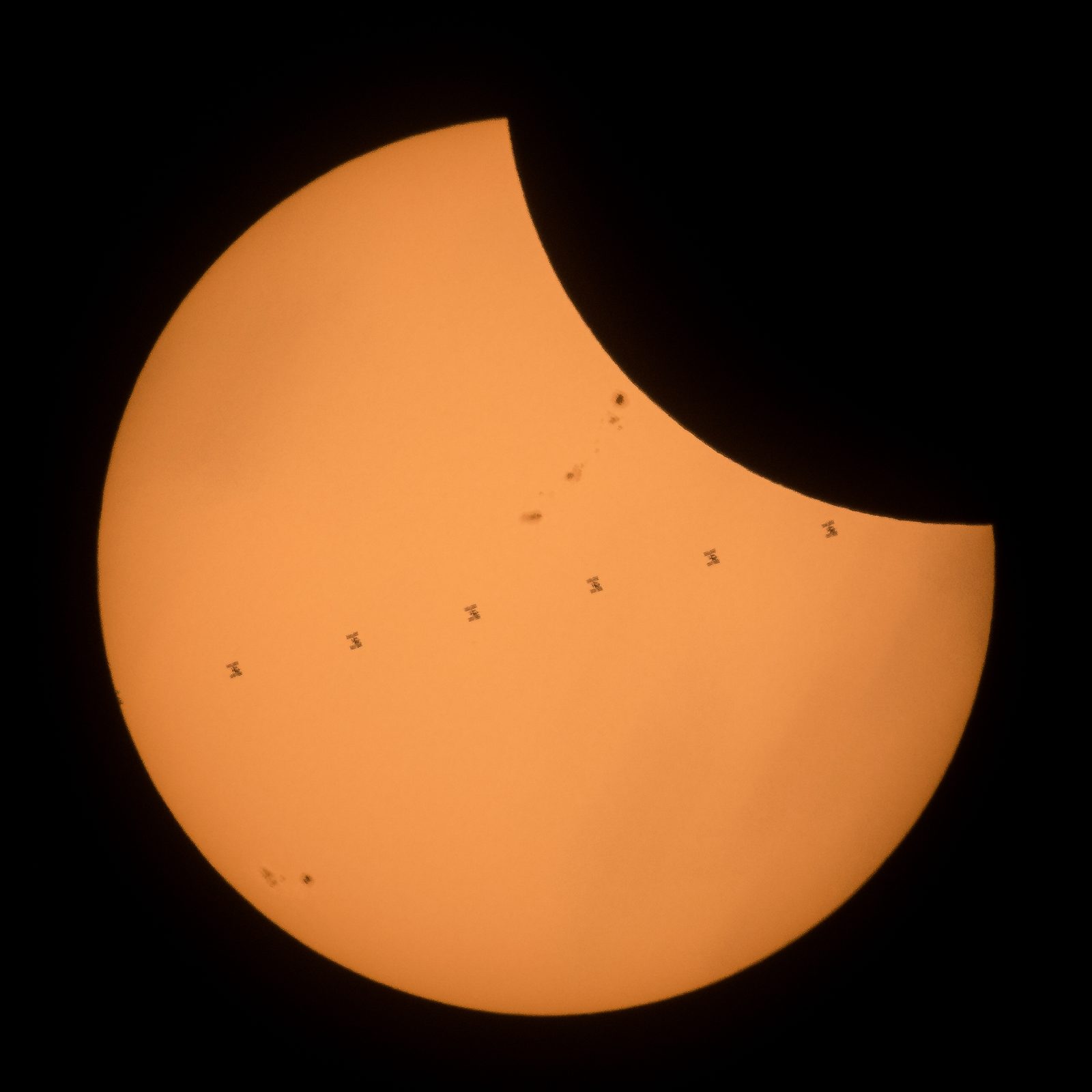
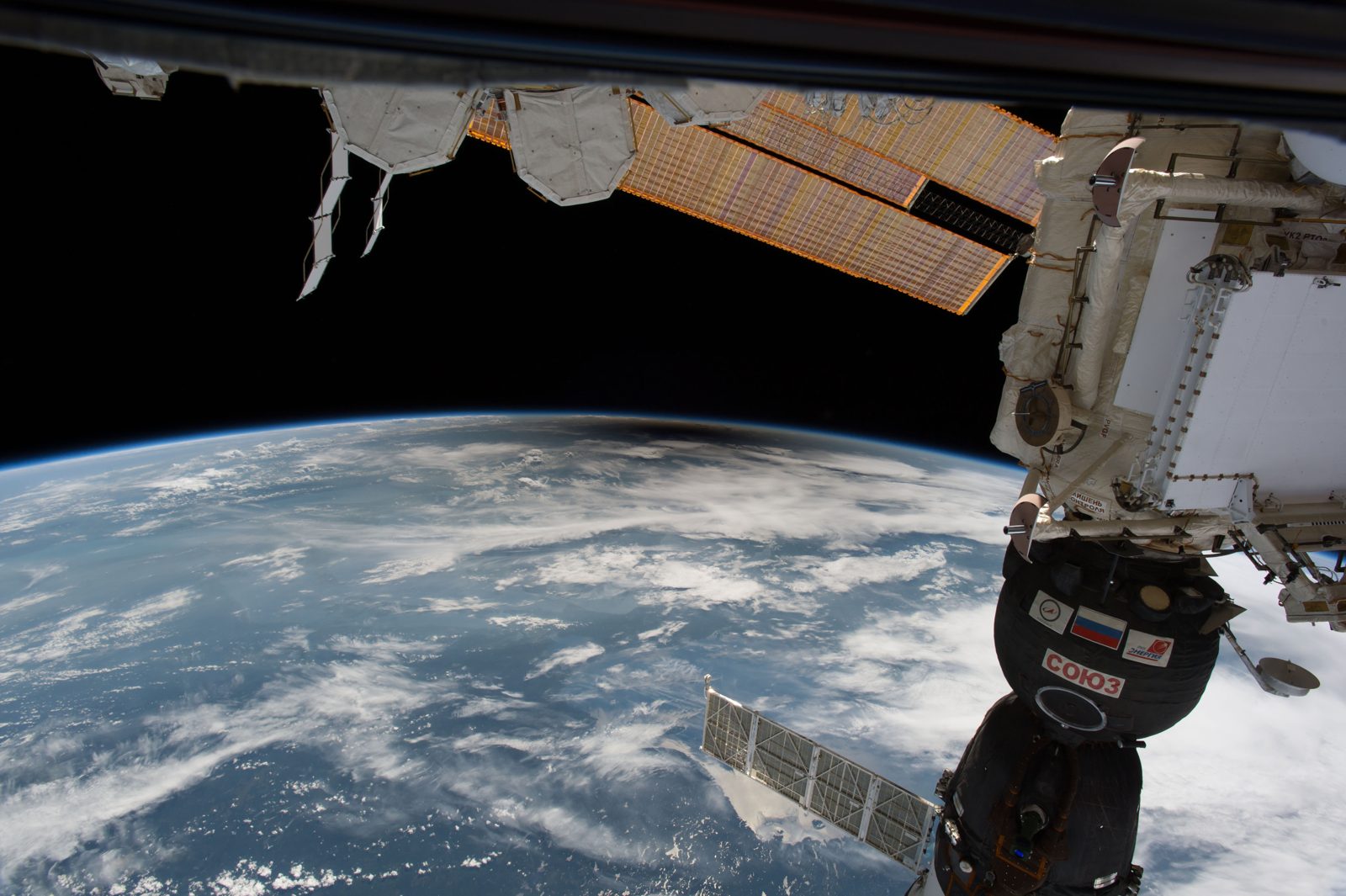
Below is how the Moon actually crosses the Sun as recorded in visible light by SDO during the 2017 eclipse. Same one-way crossing — different year. From West Cumbria tomorrow, the Moon only reaches about 88% cover before continuing off the disc.
How to watch safely
- Use ISO-certified eclipse glasses (or a handheld solar viewer) for every direct look. Ordinary sunglasses are useless for this.
- Never look through a phone, binoculars, or a telescope at the Sun unless you have a proper solar filter on the front of the optic — phone cameras and eyes both burn.
- Cloud doesn’t make it safe. If the Sun is bright enough to cast shadows, it’s bright enough to damage vision.
- Indirect methods still work — a pinhole projector, or the dappled crescents under a leafy tree, are a fine backup if glasses are scarce.
- Kids need the same rules — and an adult checking the glasses aren’t scratched or fake.
UKHSA and astronomy groups have been repeating the same line for weeks for a reason — this is the deepest solar eclipse the UK has seen since 1999, and partial eclipses are exactly when people get hurt, because it still “looks like daytime.”
A Wednesday plan
- Finish early if you can — peak is tea-time, not midnight.
- Pick one of the map spots (or anywhere with the same open west-northwest sky).
- Be in place by ~6pm with glasses ready.
- Watch the first bite, then glance at the landscape — colours go flat, shadows sharpen, gulls and dogs sometimes notice before people do.
- At ~7.06pm, the crescent is thinnest — that’s the photograph if your filter and camera are set up safely.
- Stay for the unwind toward 8pm, then enjoy a normal August sunset.
Why we’re writing this from West Cumbria
Marra is a Cumbrian business. We help small local firms learn how to use AI properly — but we still live under the same sky as everyone else on the west coast. Tomorrow’s eclipse is one of those rare evenings when towns from Whitehaven to Maryport can share the same clock — look west, protect your eyes, and watch the Moon do geometry in public.
If the forecast cooperates, I’ll be out there too. If it doesn’t, there’s always the NASA stream — and the next deep UK partial of this scale isn’t something you shrug off and catch “next month.”
— Kris Wilkinson, Workington